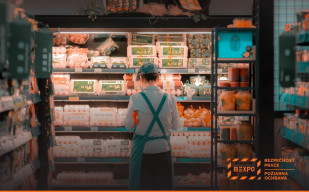
Workplace safety for a shop and retail
A shop looks like a low-risk operation, and in the work categorisation it usually is. Even so, retail outlets are a regular target for inspections: they have shift staff, a stockroom, ladders, electrical appliances and often food as well. Here is what you need in order.
What you need from your first employee
- initial OSH training and refresher training at least every three years (Section 7(1) and (5) of Act No. 124/2006 Coll.),
- a written risk assessment document and a list of PPE provided (Section 6(1)(c) and (d) of Act No. 124/2006 Coll.),
- occupational health service and work categorisation (Section 21(3) of Act No. 124/2006 Coll.),
- fire protection training on entry and then every 24 months (Section 22 of Decree No. 121/2002 Coll.),
- fire protection documentation under Section 9(2) of Act No. 314/2001 Coll.,
- records of occupational accidents under Section 17 of Act No. 124/2006 Coll.
Manual handling and the stockroom
Unloading goods, moving pallets and refilling shelves fall under Government Regulation No. 281/2006 Coll. on the manual handling of loads. The risk assessment has to cover package weights, frequency, pick height and trunk rotation. In the stockroom also deal with racking capacity, its inspections, anchoring, and the rule that nobody climbs the racking instead of using a ladder. If you use a pallet truck or a forklift, the operator needs a certificate of professional competence under Section 16 of Act No. 124/2006 Coll.
Falls, slips and trips
The most common accident in a shop is not dramatic: it is a fall on a wet floor or from a ladder. That means non-slip flooring and footwear, immediate marking of a wet area, order in the aisles and ladders with a valid inspection. A ladder with a cracked rung is a finding an inspector will make in two minutes.
Food and epidemiologically significant activity
If you sell unpackaged food, bakery products or run a deli counter, this is an epidemiologically significant activity. Employees must meet the health and professional competence requirements under Sections 15 and 16 of Act No. 355/2007 Coll. The everyday term "health card" does not exist in the law; it refers to a certificate of health fitness issued by a physician. Add an operating manual, a sanitation plan and records of refrigeration temperatures.
Electrical appliances and refrigeration
Refrigerators and freezers, bakery ovens, tills, terminals and extension leads are subject to regular inspections and tests. Since 1 May 2025 the applicable standard is STN 33 1630:2025, which replaced STN 33 1600 and STN 33 1610, with parallel use until 1 May 2027. The shop's electrical installation is dedicated technical equipment under Decree No. 508/2009 Coll.
Fire protection of the shop
A shop is a space with public access, so every inspection looks at escape routes: portable fire extinguishers in the quantity set by Section 9 of Decree No. 347/2022 Coll. checked once a year, hydrants under Section 15 of Decree No. 699/2004 Coll., free and marked escape routes and exits under Government Regulation No. 387/2006 Coll. rather than blocked by pallets of goods, working emergency lighting, preventive fire inspections under Section 14 of Decree No. 121/2002 Coll., and fire alarm instructions and an evacuation plan where required. In a shopping centre unit the tenant performs these duties unless the lease says otherwise (Section 6(2) of Act No. 314/2001 Coll.).
Seasonal staff and peaks
Before Christmas and during the holidays the number of temporary staff grows. Each of them needs initial training and instruction about the specific workplace before starting work, assigned PPE and a signed record. Without that, an accident is also a breach of Section 7 of Act No. 124/2006 Coll.
Ask for a quotation for your shop, tell us the number of outlets and employees.
-
How to avoid fines for OSH, fire protection and oc...
OSH fines up to €100,000, fire protection up to €16,596, occup...
-

Workplace safety for a hotel and guest house
What a hotel needs: evacuation plan and fire alarm instruction...
-
Workplace safety for a shop and retail
What a shop needs: training, risk assessment, manual handling...
-
Workplace safety for production and workshops
What a production hall needs: machine guarding, local operatin...