Basic training - forestry machinery (2 groups)
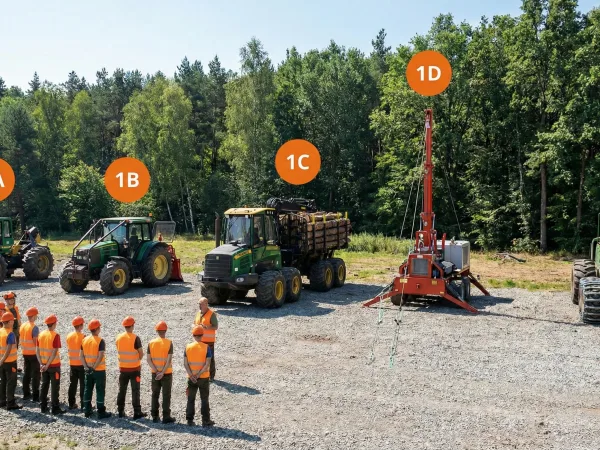
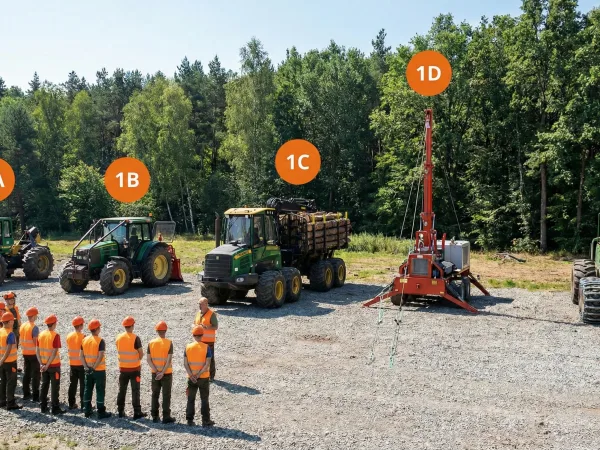
Forestry machinery is divided into five groups. They are 1A skidding winches, 1B universal and special tractors used in timber extraction, 1C wheeled and tracked forwarding units for timber and timber assortments, 1D stationary cable yarding installations in forestry and 1E single purpose and multi purpose machines for felling, delimbing, cross cutting and debarking trees and timber assortments.
This course is for two of these five groups. Tell us when registering which two the operator needs and we will issue the certificate precisely for them. The most frequent combination is 1B and 1C, that is an extraction tractor and a forwarding unit.
We go through the construction and the controls of both machines, work on sloping and uneven terrain and the permitted gradients, the stability of the machine during timber extraction, work with the cable and the winch and securing the area under a tensioned cable, loading and securing the load, the movement of people in the working area, moving along a forest road and the check before the start of a shift.
The course ends with a written test. After that we issue a written certificate of completed education and training under Section 16(1)(b) of Act No. 124/2006 Coll.
The course is open to a person from 18 years of age who has completed compulsory basic schooling and holds a medical report on fitness for work that is not older than six months.
The certificate has to be kept valid. The familiarisation is repeated at least once every three years under Section 7(5) of Act No. 124/2006 Coll., and updating professional training every five years under Section 16(8). You can take both with us; the course Refresher training, forestry machinery serves for that.
If one group is enough for you, choose the course for one group. With a wider fleet the course for three groups is the best value.
We train under Slovak regulations, which derive from Directive 2009/104/EC on the use of work equipment, valid throughout the European Union. In our experience the certificate is commonly recognised in the other member states.